If you have gotten three website quotes for the same business and they came back miles apart, you are not imagining things. Small business website design cost can swing from a few hundred dollars to well into five figures, and the gap usually comes down to scope, process, and whether the site is built to look decent or built to generate leads.
For most small businesses, especially local service companies, the right question is not simply, “What does a website cost?” It is, “What am I actually paying for, and what will this site do for the business?” A cheap site that does not rank, does not load well on mobile, and does not turn visitors into calls is expensive in all the ways that matter.
What small business website design cost usually includes
A website quote can look simple on the surface, but the real value is in what is included behind the scenes. In one project, pricing might cover strategy, site structure, copy support, design, development, on-page SEO, forms, testing, launch setup, and post-launch training. In another, the quote may only cover a basic template install with very little customization.
That is why small business website design cost is rarely just about design. You are usually paying for some mix of planning, messaging, technical setup, and conversion work. For a service business, that might include clear service pages, strong calls to action, contact forms that actually route properly, and a mobile layout that makes calling easy.
If you are comparing proposals, the key is to separate cosmetic work from business-critical work. Nice visuals matter, but structure, speed, and clarity are what usually move the needle.
Typical price ranges for a small business website
At the low end, you will find freelancers or DIY platforms advertising websites for a few hundred dollars. Sometimes that is enough for a solo operator who only needs a simple online presence. More often, those low prices reflect narrow scope, recycled templates, limited revisions, weak copy, and no real strategy.
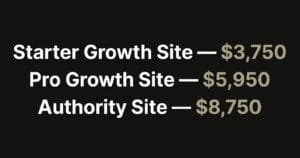
A more realistic range for a professionally built small business site is often around $2,500 to $8,000, depending on the number of pages, the amount of custom design, the quality of the copy, and the lead-generation features included. That range tends to fit many local service businesses that need a site to look credible, explain services clearly, and drive calls or quote requests.
Once you move into more advanced needs, costs can rise to $10,000 or more. That usually happens when the project includes extensive custom functionality, a larger sitemap, deeper SEO planning, custom integrations, or a longer discovery process with more stakeholders involved.
None of those numbers are inherently right or wrong. The real issue is fit. If your business needs a five-page lead-gen site with a clear offer and fast launch, you probably do not need an agency process designed for a regional brand rollout.
What actually drives website pricing
The biggest cost driver is scope. A five-page website is not priced the same way as a fifteen-page website with individual service pages, location pages, testimonials, FAQs, and resource content. More pages means more planning, more writing, more design decisions, and more testing.
Custom copy is another major factor. Many owners underestimate how much time it takes to turn rough service descriptions into persuasive website content. If your web partner helps shape the messaging, organize the content, and write with conversion in mind, that has real value.
Design complexity also matters, but not always in the way people think. Most small businesses do not need experimental layouts or elaborate animation. They need a clean, trustworthy design that works on mobile and supports action. Customization beyond that can increase cost quickly without improving results.
Functionality can push price up as well. Booking tools, advanced forms, CRM integrations, gated content, membership features, and custom calculators all take additional setup and testing. The more moving parts, the more labor and risk involved.
Then there is process. Some firms build in layers of meetings, workshops, revisions, and internal handoffs. That can be useful for larger organizations, but for a busy contractor, attorney, consultant, or solo brand, it often adds cost without adding speed. A tighter process with defined scope and fewer handoffs usually keeps pricing more predictable.
Why some cheap websites cost more later
A low upfront quote can be tempting, especially when cash flow is tight. But cheap websites often create cleanup work later.
Maybe the site launches without clear calls to action. Maybe the content is thin, generic, or full of filler. Maybe it looks fine on desktop but falls apart on mobile, where most local traffic happens. Maybe nobody thought through page structure, so there is no solid path for adding SEO pages later. Maybe updates become a headache because the site was assembled fast and without discipline.
Those problems show up as lost leads, rework, and the need for a rebuild much sooner than expected. That is why the cheapest option is not always the lowest-cost option.
A good website cost depends on what the business needs
This is where a lot of owners get stuck. They hear broad pricing ranges, but what they really need is a practical way to judge fit.
If you are a solo professional with one main offer, a compact site may be enough. You need a strong homepage, an about page, a services page, contact information, and a few trust-builders. In that case, a smaller budget can make sense if the execution is solid.
If you run a home service business with multiple services, active local competition, and a real need for inbound leads, your site needs to do more. It should explain each service clearly, support local search visibility, make trust signals obvious, and remove friction from calling or requesting an estimate. That usually means a larger scope and a higher investment.
If your website is central to how you get work, the budget should reflect that. For many service businesses, the site is not a brochure. It is part of the sales system.
How to compare website quotes without getting burned
Start with scope clarity. If one proposal says “website design” and another breaks out pages, copy support, revisions, forms, SEO setup, and launch tasks, the second one is easier to trust because you can actually see what you are buying.
Look at timelines too. A long timeline is not always a sign of quality. Sometimes it just means bloated process. On the other hand, a rushed timeline with no content planning can create its own problems. The best setup is usually a defined schedule with clear responsibilities and firm boundaries around revisions.
Ask how content is handled. This matters more than many owners expect. If you are responsible for delivering polished copy for every page before work starts, that changes the true cost of the project. It may save money on paper while creating a major time burden on your side.
Also ask what happens after launch. Some providers disappear. Others include training, support, or optional maintenance. That post-launch piece can make a real difference, especially if you want the site to stay current and useful.
The smartest way to budget for small business website design cost
Think in terms of return, not just spend. If a better website helps you close a few extra jobs a month, the math changes fast. For a plumber, roofer, electrician, or restoration company, one additional booked job can cover a meaningful chunk of the build cost.
That does not mean every business needs the biggest package available. It means you should budget around business goals. If the priority is speed, credibility, and lead flow, put money into the parts that support those outcomes. Clear messaging, service-page structure, mobile performance, and conversion-focused layout usually matter more than visual extras.
This is also where packaged pricing can help. A fixed-scope website build with clear deliverables and timeline removes a lot of the guesswork that makes website buying frustrating. Browncoat Digital leans into that model for a reason. It keeps expectations clean and helps owners choose based on actual need, not agency theater.
When paying more makes sense and when it does not
Paying more makes sense when the added cost buys meaningful outcomes. Better copy, smarter page structure, stronger local SEO setup, and cleaner conversion flow are usually worth it. They affect how the site performs.
Paying more does not make sense when you are funding complexity for its own sake. If a proposal is padded with vague strategy language, endless meetings, or design flourishes that do not support sales, be careful. Small businesses need useful websites, not expensive process.
A website should earn its keep. It should help the right people understand what you do, trust you quickly, and take the next step without hesitation.
If you are pricing a new site right now, do not chase the lowest number and do not assume the highest number means best. Look for clear scope, strong thinking, and a process built without the drama. That is usually where the real value lives.