If your website still looks like a side project, your business pays for it every day. People land on the site, glance for a few seconds, and decide whether you look credible enough to call. That is why choosing the right small business website design agency is less about fancy visuals and more about whether the site helps you win work.
For a local service business, an author, or an independent operator, the stakes are simple. You need a website that loads fast, works on mobile, explains what you do, and gives people a clear next step. You do not need a six-month strategy engagement, endless meetings, or a bloated proposal full of features you will never use.
What a small business website design agency should actually do
A good agency should reduce friction, not create it. That means helping you get from idea to launch without dragging you into a maze of revisions, jargon, and vague timelines. If the process feels confusing before the project starts, it usually gets worse after you pay.
The real job is straightforward. A website design partner should organize your service pages, shape clear messaging, build trust with the right proof points, and turn visits into calls, forms, and bookings. Design matters, but only if it supports those outcomes.
For most small businesses, the basics carry the most weight. Clean page structure, strong mobile usability, obvious calls to action, and copy that answers buyer questions will usually outperform a prettier site that hides the important stuff.
Why small businesses get burned by the wrong agency
Small businesses often buy websites the same way they buy signs, uniforms, or truck wraps. They judge what looks good and assume the rest will sort itself out. That approach can work for branding projects. It is riskier for websites, because the site has a job to do.
The wrong agency tends to fail in predictable ways. They overbuild. They disappear into a long planning phase. They rely on the owner to provide every piece of copy and every decision. Or they pitch custom everything when a focused framework would get the site live faster and with less risk.
There is also a scale problem. Large agencies often bring big-agency process into small-business work. That means discovery decks, account managers, handoffs, and layers of approval that do not improve results. They increase cost and stretch timelines.
A small business owner usually needs the opposite. Clear scope. Direct communication. Defined deliverables. A launch date that means something.
How to judge a small business website design agency
The best way to evaluate an agency is to look past the sales language and ask how they operate. Process tells you more than promises.
Start with scope and timeline
If an agency cannot explain what is included, how many pages you are getting, what content support looks like, and when the site will launch, that is a red flag. Ambiguity tends to become change orders, delays, and budget creep.
A serious partner should be able to tell you, in plain English, what happens first, what they need from you, how feedback works, and what could affect timing. No mystery. No theatrics.
Ask how they handle copy and structure
Most business owners are not sitting on polished website copy. They may know their services cold, but that does not mean they can turn those details into high-converting pages quickly. If the agency expects you to write everything from scratch, the project may stall before it really starts.
A practical agency helps shape the message. That might mean interviews, structured intake, editing, or writing based on your service offerings and market. The exact method can vary, but the support needs to be there.
Look for lead generation thinking
A website can be technically sound and still weak at generating business. Ask how they approach calls to action, contact forms, page hierarchy, trust elements, and local relevance. If the conversation stays focused on colors and layouts, you are not talking to a lead-focused team.
For service businesses especially, simple wins matter. Click-to-call buttons, strong service area messaging, clear service breakdowns, review integration, and easy quote requests often drive more value than flashy motion effects.
What the right website should include
Not every business needs the same build, and that is where some nuance matters. A one-truck handyman operation does not need the same site architecture as a multi-location HVAC company. But most small-business websites need the same core pieces.
You need a homepage that makes the offer clear fast. You need service pages that explain what you do in language customers understand. You need trust signals, whether that is testimonials, certifications, before-and-after examples, or signs of local experience. You need contact paths that are easy to find and easy to use on a phone.
You also need technical basics handled properly. Mobile responsiveness, page speed, clean navigation, and sensible on-page SEO are not extras. They are table stakes.
That said, more is not always better. Some businesses benefit from deeper service-page coverage and stronger SEO structure. Others simply need a credible online presence that helps referrals and direct traffic convert. The right agency should know the difference and avoid overselling.
When packaged website services make more sense
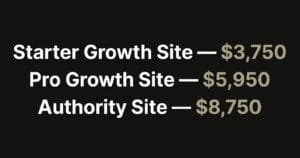
For many small businesses, a packaged build is the smarter option. Not because it is cheap, but because it creates boundaries. Defined page counts, set features, and clear delivery windows remove a lot of the chaos that slows projects down.
That structure is especially useful when speed matters. If you need a site live this month, a custom process built around open-ended exploration is usually not your friend. A disciplined package with room for targeted customization often gets better business results because it keeps everyone focused.
This is where a company like Browncoat Digital fits the market well. The appeal is not agency flash. It is senior-led execution, fixed scope, and websites built to launch without the drama. For busy operators, that matters.
Red flags to watch before you sign
Some warning signs show up early if you know where to look. Be cautious if pricing feels vague, if every answer leads to a custom quote, or if the agency cannot explain the difference between a brochure site and a lead-generation site.
Be cautious too if they make performance promises they cannot control. No agency can honestly guarantee rankings, lead volume, or revenue from a new website alone. What they can do is build a site that gives your traffic a better chance to convert.
Another common issue is revision creep. If the process has no firm boundaries, the project can drag while everyone chases minor changes. A good agency creates enough structure to keep momentum without making you feel boxed in.
The trade-off between custom and fast
There is always a trade-off. A deeply custom site can offer more flexibility, more tailored features, and more brand-specific design treatment. It also tends to cost more, take longer, and require more involvement from you.
A faster, package-based site gives up some of that open-ended freedom in exchange for speed, clarity, and lower operational drag. For many small businesses, that is a good trade.
The key is to be honest about what you actually need. If your main goal is to look credible, rank for core services over time, and turn visitors into calls, a streamlined build may be the strongest option. If you have unusual functionality, multiple business lines, or a complex content strategy, you may need something more custom.
How to make the project easier on your side
The fastest way to get a better result is to show up with clear inputs. You do not need a full marketing brief, but you should know your core services, service area, ideal jobs, and what makes customers choose you over the shop down the road.
Photos help. Reviews help. A rough list of competitors helps. Even a simple note about the kinds of leads you want more of can sharpen the whole project.
And once the project starts, responsiveness matters. Small delays in approvals or missing materials can throw off an otherwise tight timeline. The agency should keep things organized, but you still need to keep the ball moving.
The best agency choice is usually the clearest one
A small business website design agency earns its value by making decisions easier, not harder. You should know what you are buying, when it will launch, and how the site is supposed to help your business grow.
If you are comparing options, do not get distracted by who sounds the most sophisticated. Pay attention to who communicates clearly, who understands lead flow, and who has built a process around getting small businesses online without wasting their time. The best website projects usually feel less like a pitch and more like a well-run job.