A cheap website that never brings in a call is not a bargain. Neither is a large agency engagement packed with meetings, vague timelines, and features your business will never use. When you choose a web design package, the goal is simple: pay for the pages, lead tools, and support your business needs to win more work.
For a plumber, HVAC contractor, landscaper, or independent professional, a website is not a digital brochure. It is a sales tool that has to earn trust quickly, work cleanly on a phone, and make it easy for a prospect to call, request an estimate, or book a service. The right package gets that job done without dragging your team into a six-month project.
Start With the Jobs Your Website Must Do
Before comparing page counts or prices, decide what a successful website needs to accomplish for your operation. Most service businesses need to establish credibility, explain their services, show where they work, and turn visitors into leads. That sounds basic, but each job affects the scope of the build.
A single-location handyman may need a strong homepage, service pages, an about page, reviews, a service-area page, and a contact page. A restoration company with separate emergency, water, fire, and mold services needs more room. Each service deserves its own focused page if customers search for it separately and it is meaningful to the business.
Ask yourself three practical questions: What services bring the best jobs? What information does a customer need before contacting us? Where are we losing leads now? Your answers should guide the package, not a designer’s preference for a larger sitemap.
Choose a Web Design Package Based on Scope
Packages are useful because they put boundaries around cost, timing, and deliverables. That only works when the scope is clear. A package should tell you how many pages are included, what happens with copywriting, whether search engine basics are covered, and how many rounds of revisions are part of the process.
Page count matters, but it is not the whole story. Five thin pages with generic copy will not outperform a smaller, well-planned site with clear service messaging and strong calls to action. On the other hand, squeezing eight distinct services onto one crowded page can make it harder for both customers and search engines to understand what you do.
A sensible starting point usually looks like this:
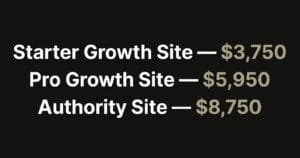
- A Starter-level build fits a newer business, a solo operator, or a company with a limited set of services and one primary market.
- A growth-focused package fits established service businesses that need dedicated service pages, stronger local search foundations, review proof, and better lead paths.
- A larger authority package fits companies with several services, multiple locations, more competitive markets, or a clear need for deeper content and lead-generation features.
The best fit is not automatically the largest option. It is the package that covers the work required now and leaves a clean path to add pages later. If a provider cannot explain what is included and why it matters, pause before signing.
Look Past the Homepage
Many business owners judge a web design package by the homepage mockup. The homepage matters, but it is only one part of the machine. A lot of visitors will land directly on a service page after searching for something specific, such as “air conditioner repair” or “emergency electrician.” That page needs to stand on its own.
Good package scope accounts for the pages beneath the homepage. Service pages should explain the problem, the service, the areas covered, and the next step. Contact paths should be obvious. Phone numbers need to be tappable on mobile. Estimate forms should ask for enough detail to qualify the lead without feeling like paperwork.
Also ask how the package handles trust. For local businesses, proof often moves the decision faster than a polished design. Reviews, project photos, licenses, certifications, team details, warranties, and clear service-area information can all help a visitor feel comfortable reaching out. Not every business needs every element, but the package should make room for the proof your customers care about.
Make Mobile Lead Generation Non-Negotiable
Most local service prospects are not sitting at a desk comparing websites. They are on a phone, often with a problem that needs attention soon. If the site loads slowly, hides the phone number, or makes the contact form difficult to use, you have created friction at the worst moment.
A web design package should include a mobile-first build, not a desktop site that has been squeezed down after the fact. Check that the provider plans for clear mobile navigation, visible calls to action, readable type, compressed images, and forms that work without pinching, zooming, or guessing.
Lead generation also means choosing the right action for your customers. A 24-hour HVAC company may need a prominent call button. A remodeling contractor may benefit from a project inquiry form with budget and timeline fields. A consultant may need a booking tool. There is no universal best feature. The right one matches how your best customers prefer to start the conversation.
Know What “SEO Included” Actually Means
SEO is one of the most abused phrases in web design. A package may promise it, but that could mean anything from sensible page titles to a full content and local-search strategy. Neither is automatically wrong. The problem is buying one while expecting the other.
For a new or smaller site, foundational SEO is often the right place to begin. That includes a logical page structure, relevant page titles and descriptions, clean headings, basic technical setup, and copy that clearly identifies services and service areas. These pieces give the site a solid starting position.
More competitive businesses may need deeper work: dedicated service content, location pages where they are genuinely useful, stronger internal page structure, conversion-focused copy, and an ongoing plan after launch. If you serve Omaha and nearby communities, for example, a generic statement that you serve “the metro area” is weaker than useful pages that explain the services and communities you actually cover.
Be wary of guarantees about instant rankings. Search visibility takes time, competition varies, and no honest provider controls the results page. What they can control is whether the site is built with a clear structure, helpful content, and a sound technical foundation.
Check the Process Before You Buy
A package with clear pricing can still become painful if the process is loose. Busy owners need a provider who can gather the right inputs, make smart recommendations, and keep the project moving without requiring a weekly committee meeting.
Ask what the intake looks like, who writes or refines the copy, when you will see the first draft, and what the launch timeline depends on. You should know what you need to provide: logo files, service details, photos, access to your domain, review links, and any required legal or licensing information.
Revision limits are worth discussing up front. Defined revisions protect both sides. They give you a real chance to improve the work while preventing an agreed project from turning into an open-ended redesign. If you expect custom features, complicated integrations, extensive photography, or a large content migration, treat those as separate scope items rather than assuming they are hidden inside a standard package.
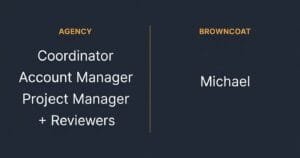
This is where a senior-led, disciplined process earns its keep. Browncoat Digital packages are designed to keep decisions clear and launch work moving, not to create sales pressure or bury you in agency theater.
Plan for the Work After Launch
Launching the site is a milestone, not a permanent finish line. Your services change, reviews accumulate, new projects are completed, and customers ask better questions than you expected. A good package should make it clear whether you can update the site yourself, receive training, or use ongoing support when you need it.
Do not buy a maintenance plan you will never use. But do not assume a website can be ignored forever, either. At a minimum, someone should handle software updates, backups, security checks, and occasional content changes. Businesses that rely on steady local leads should also revisit their service pages and conversion paths as they learn what drives calls.
The practical choice is the one that gives your business a credible, fast, lead-focused site now without paying for imaginary complexity. Get the essentials right, keep the scope honest, and choose a partner who can explain every line item in plain English. That is how a web design package becomes a working part of your sales operation instead of another expense gathering dust.