A website that looks acceptable but fails to earn calls is not a bargain. For a busy contractor, consultant, or local service owner, the website builder versus designer decision is less about personal preference and more about what happens after someone finds you on their phone: Do they understand what you do, trust you, and contact you?
Both paths can produce a functional site. The difference is how much of the strategy, writing, setup, and problem-solving lands on your desk. Here is the straight answer on where each option makes sense, where it falls short, and what to choose when lead generation is the job.
Website Builder Versus Designer: The Real Difference
A website builder is a tool. It gives you templates, prebuilt sections, a visual editor, and usually hosting in one place. You choose a layout, add your logo and text, connect a domain, and publish. Builders are designed to make site creation accessible without code.
A website designer is a person or team responsible for turning a business goal into a website plan and finished product. That may include page structure, messaging, visual design, mobile layout, calls to action, technical setup, local SEO basics, forms, analytics, and launch support.
That distinction matters because a builder does not decide which services deserve their own pages, what your home page should say above the fold, or whether your contact form is costing you leads. It provides the materials. You still have to build the house.
For some businesses, that trade-off is perfectly reasonable. For others, it becomes an expensive use of owner time disguised as a low-cost solution.
When a Website Builder Is the Right Call
A builder can be a smart choice when your website has a simple job and you have the time to do the work well. A new solo operator who needs a basic online presence, an author promoting one book, or a business testing an idea may not need a larger professional build on day one.
It also works when you are comfortable writing clear sales copy, choosing strong images, organizing pages, and checking every layout on mobile. That last part gets missed often. A template can look sharp on a laptop and become awkward, cramped, or confusing on a phone, where many local customers will first encounter it.
The main advantages are obvious: lower upfront cost, quick access, and control over small changes. If you need to update a seasonal offer, swap a photo, or add a short announcement, you can do it yourself.
But lower upfront cost does not mean lower total cost. If the site takes three weekends to finish, still does not explain your services clearly, and needs to be rebuilt six months later, the savings disappear. The question is not whether you can publish a website. It is whether you can publish one that earns its place in the business.
Where DIY Sites Commonly Lose Leads
Most DIY sites do not fail because the owner picked the wrong shade of blue. They fail because the key decisions were never made.
A home page may lead with a vague slogan instead of the service area, core service, and reason to call. Service pages may be missing, buried in navigation, or copied from a competitor. Contact details may be hard to find. Forms may ask too many questions. The site may have no proof points, no reviews, no project photos, and no clear next step.
For a local HVAC company, plumber, electrician, or restoration firm, those gaps are not cosmetic. A customer with an urgent problem is scanning for answers: Do you handle this job? Do you serve my area? Can I reach you now? Do you look legitimate? A site should make those answers easy to find within seconds.
Templates also create a sameness problem. Many businesses start from the same layouts, use the same stock photos, and fill the same generic text blocks. There is nothing wrong with a proven structure, but the message needs to be specific to your work, customers, and market. A professional site should feel like your business, not a demo someone forgot to customize.
What You Are Paying a Designer to Do
Hiring a designer is not simply paying someone to make a nicer-looking website. At least, it should not be.
You are paying for judgment. A good designer asks what leads are worth, which services drive the best jobs, where customers get stuck, and what evidence builds trust. They turn those answers into a page plan that gives visitors a clear route from search result to phone call, form submission, or booking request.
That work includes details that are easy to overlook when you are trying to run a business: readable mobile typography, service-specific calls to action, clean navigation, image selection, page speed, form routing, basic search visibility, and handoff after launch. None of these items alone is glamorous. Together, they determine whether the site feels credible and easy to use.
A good designer also gives the project boundaries. You know what pages are included, what content is needed, when feedback is due, and when the site will launch. That clarity is valuable for owners who do not want a website project dragging on for months.
The Trade-Offs of Hiring a Designer
Professional design costs more than a monthly builder subscription. It should, because you are purchasing expertise and labor, not just software access. The wrong designer can also create headaches: unclear scope, excessive meetings, slow timelines, surprise fees, or a beautiful site with no practical path to generate leads.
That is why the choice is not really builder versus designer in the abstract. It is builder versus a designer with a defined process and a clear understanding of small-business conversion.
Before hiring anyone, ask direct questions. How many pages are included? Who handles copy and images? What happens on mobile? Are forms, tracking, domain connections, and basic SEO setup part of the project? How long will the build take? What does support look like after launch?
If the answers are fuzzy, expect the project to become fuzzy too. No surprises. No hassle. No sales pressure. Those are not just nice words. They are signs of an operation that respects your time.
Choose Based on the Cost of a Missed Lead
The best decision usually becomes clear when you look at the value of one new customer.
If a typical job brings in a few hundred dollars and your website is mostly a digital business card, a well-executed builder site may be enough for now. Keep it clean, focused, and current. Do not overbuild before the business needs it.
If one booked project is worth thousands, the math changes quickly. A remodeling contractor, commercial service provider, attorney, specialty consultant, or restoration company does not need many additional qualified leads for a professional site to justify itself. In that case, the greater risk is not paying for design. It is sending paid traffic, referrals, and search visitors to a site that gives them no reason to act.
Speed matters here as well. A DIY site can launch quickly if you already have content, photos, and confidence with the platform. More often, it sits unfinished because every decision requires research and second-guessing. A focused designer-led process can be faster because the work is guided, the scope is set, and someone owns the details.
A Middle Ground That Works for Growing Businesses
You do not always need a fully custom, open-ended agency engagement. Many small businesses need a practical middle ground: a professionally built site using a proven framework, customized around their services, brand, and conversion goals.
That approach keeps costs and timelines under control while avoiding the common DIY traps. You get a site structured for how customers actually shop, with clear service pages, strong calls to action, mobile-first design, and a straightforward way to update it later.
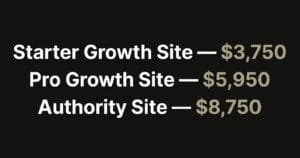
At Browncoat Digital, that is the operating model: senior-led website builds with defined scope, clear pricing, and a fixed path to launch. The goal is not design for design’s sake. The goal is a credible website that helps turn traffic into calls, forms, and booked work.
Make the Decision Without Overthinking It
Choose a website builder if your needs are simple, your budget is tight, and you can realistically handle the copy, structure, mobile review, and ongoing upkeep. Treat it as a business project, not an afternoon experiment.
Choose a designer if your site needs to generate meaningful leads, communicate several services, compete in a crowded local market, or represent a business where trust is the sale. Look for a partner who talks plainly about scope, timing, conversion goals, and what is required from you.
Your website does not need fancy features to do its job. It needs to answer the right questions, remove friction, and give ready-to-buy customers an easy next step. Start there, and let the size of the investment follow the value of the opportunity.