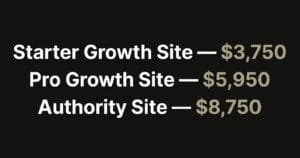
A website quote should not feel like a starting bid at an auction. If you are asking, are website quotes fixed, the honest answer is: they can be – but only when the work is clearly defined before the project begins.
For a small business owner, a fixed quote is usually the best arrangement. You need to know what the site will cost, what you are getting, and when it will be ready. You do not need a vague estimate followed by a string of invoices for meetings, revisions, or tasks that were supposedly outside the plan.
The catch is simple. A fixed price applies to an agreed scope of work. If the scope changes, the price may need to change too. That is not a bait-and-switch when it is handled upfront and documented clearly. It is basic project control.
What a fixed website quote should cover
A legitimate fixed website quote spells out the deliverables, not just a dollar amount. It should tell you how many pages are included, what kind of design and development work is being done, what content support is provided, and what happens at launch.
For a typical service-business website, that may include a mobile-first design, a defined number of service and location pages, contact forms, click-to-call buttons, basic on-page SEO, analytics setup, and a set number of revision rounds. It may also include help organizing your services, writing or refining page copy, sourcing licensed images, and connecting your domain.
The more specific the quote, the more useful the fixed price becomes. “Five-page website” is a start, but it leaves plenty of room for confusion. “Home, About, Services, two service pages, contact form, mobile optimization, basic local SEO setup, and launch within four weeks after content approval” is far more actionable.
A good quote also states what is not included. That is not a red flag. It is how both sides avoid trouble later. Ongoing SEO campaigns, paid ad management, custom booking software, photography, logo design, advanced integrations, and unlimited revisions are separate services unless they are expressly included.
Are website quotes fixed from every agency?
No. Agencies and freelancers price website work in different ways, and each model has trade-offs.
Some charge hourly. That can make sense for open-ended work, such as maintaining a large site, troubleshooting a technical issue, or gradually improving a site over several months. The downside is uncertainty. You may know the hourly rate but not the final bill.
Others provide estimates. An estimate is a best guess based on the information available at the time. It is not necessarily a promise that the project will stay at that number. This approach is common when the builder does not yet know how much content, functionality, or decision-making will be involved.
Then there are fixed-price packages. These work well for businesses that need a professional lead-generation site without a long agency engagement. The package defines the boundaries: page count, features, timeline, and support. You know where you stand before the work starts.
For most electricians, HVAC companies, landscapers, restoration firms, and independent professionals, a fixed package is easier to budget for and easier to manage. It replaces the “we will see as we go” approach with a straightforward plan.
When a fixed price can change
A fixed quote is not a blank check for unlimited additions. The price should remain fixed as long as the agreed project stays within scope. It can change when you ask for work that was not part of the original agreement.
Common examples include adding more pages after design has started, requesting a second website or a separate landing-page campaign, adding e-commerce, integrating a specialized CRM or scheduling platform, or changing direction after approving the site structure. A request to turn a simple contact form into a multi-step estimate calculator, for example, is a different level of work.
Content delays can also affect a timeline, although they should not automatically create extra fees. If a project is waiting weeks for photos, service details, approvals, or access to your domain account, the launch date may need to move. A disciplined provider will explain that in advance rather than quietly blaming the client later.
There is a difference between a normal revision and a scope change. Adjusting a headline, swapping a photo, or tightening a service description should fall within a reasonable revision process. Asking to rebuild the homepage around a new business model after approving the first version is a larger change. Clear boundaries protect both parties.
How to tell whether a quote is actually clear
Before accepting a website proposal, look for practical answers to a few questions. You should be able to identify the pages included, the features included, the expected delivery timeline, the payment schedule, and the number of revision rounds.
You should also know who supplies what. Will you provide all text and images? Will the web team write the first draft from an intake form and a call? Is the business responsible for purchasing hosting and a domain, or is setup included? These details affect both cost and speed.
Pay attention to vague language. Terms like “custom website,” “SEO-ready,” or “conversion optimized” can be useful, but they need substance behind them. Ask what those claims mean in the actual build. Does SEO-ready mean page titles and service-page structure, or does it mean an ongoing campaign? Does conversion optimization mean a clear call-to-action and easy contact path, or something more extensive?
The goal is not to turn every website project into a legal exercise. It is to make sure the quote matches the outcome you expect. If you need more calls and form submissions, the proposal should show how the site will guide visitors toward those actions.
Fixed pricing works best with a defined process
A clear quote is only half the job. The build process needs to support it.
The strongest fixed-price projects start with a focused intake. The web team gathers your services, service area, customer priorities, proof points, brand assets, and the actions you want visitors to take. From there, they build a site structure that matches how customers search and decide.
Next comes copy, design, build, review, and launch. There is room for feedback, but not endless circling. Too many unstructured meetings and open-ended revision requests are how straightforward projects become slow, expensive ones.
That is why defined packages are useful. They create a lane for the project to run in. Browncoat Digital uses this kind of approach because busy operators do not need more process for process’s sake. They need a credible site that loads well on mobile, explains the work clearly, and makes it easy for the next customer to call.
Questions worth asking before you sign
You do not need to be a web expert to protect your budget. Ask whether the price is fixed, what exact deliverables are included, and what would trigger an additional charge. Ask how revisions work and whether a change request must be approved before work begins.
Also ask what happens after launch. A website is not a one-time concern forever. Software updates, hosting, security, content changes, and future service pages may require ongoing support. That support can be monthly, as-needed, or handled by your own team after training. The key is knowing which arrangement you are choosing.
A provider who is confident in their process should answer these questions plainly. No word games. No mystery line items. No sales pressure.
A fixed website quote is not about finding the cheapest number on a proposal. It is about buying a defined result with clear boundaries. When the scope, timeline, and responsibilities are on the table from the start, you can move forward without wondering what the next invoice will bring.